- English
- 简体中文
- Esperanto
- Afrikaans
- Català
- שפה עברית
- Cymraeg
- Galego
- 繁体中文
- Latviešu
- icelandic
- ייִדיש
- беларускі
- Hrvatski
- Kreyòl ayisyen
- Shqiptar
- Malti
- lugha ya Kiswahili
- አማርኛ
- Bosanski
- Frysk
- ភាសាខ្មែរ
- ქართული
- ગુજરાતી
- Hausa
- Кыргыз тили
- ಕನ್ನಡ
- Corsa
- Kurdî
- മലയാളം
- Maori
- Монгол хэл
- Hmong
- IsiXhosa
- Zulu
- Punjabi
- پښتو
- Chichewa
- Samoa
- Sesotho
- සිංහල
- Gàidhlig
- Cebuano
- Somali
- Тоҷикӣ
- O'zbek
- Hawaiian
- سنڌي
- Shinra
- Հայերեն
- Igbo
- Sundanese
- Lëtzebuergesch
- Malagasy
- Yoruba
- Español
- Português
- русский
- Français
- 日本語
- Deutsch
- tiếng Việt
- Italiano
- Nederlands
- ภาษาไทย
- Polski
- 한국어
- Svenska
- magyar
- Malay
- বাংলা ভাষার
- Dansk
- Suomi
- हिन्दी
- Pilipino
- Türkçe
- Gaeilge
- العربية
- Indonesia
- Norsk
- تمل
- český
- ελληνικά
- український
- Javanese
- فارسی
- தமிழ்
- తెలుగు
- नेपाली
- Burmese
- български
- ລາວ
- Latine
- Қазақша
- Euskal
- Azərbaycan
- Slovenský jazyk
- Македонски
- Lietuvos
- Eesti Keel
- Română
- Slovenski
- मराठी
- Srpski језик

Slotted Wood Screws: Are You Installing the Right One for Your Timber?
In furniture manufacturing and timber construction, the slotted wood screw remains one of the most traditional mechanical fasteners. Its selection directly affects pull-out resistance, assembly efficiency, and long-term structural integrity. An incorrect choice often leads to wood splitting, driver cam-out, or joint failure. Industry data suggests that over 30% of furniture assembly defects are linked to improper fastener selection. This article explains how slotted wood screws differ from standard machine screws, how to verify fitment on various timber types, and which dimensional checks matter before purchase or installation. You will also find key safety protocols that prevent splitting, corrosion, and loss of clamping force, enabling informed selection and proper use.
Why Slotted Wood Screws Matter
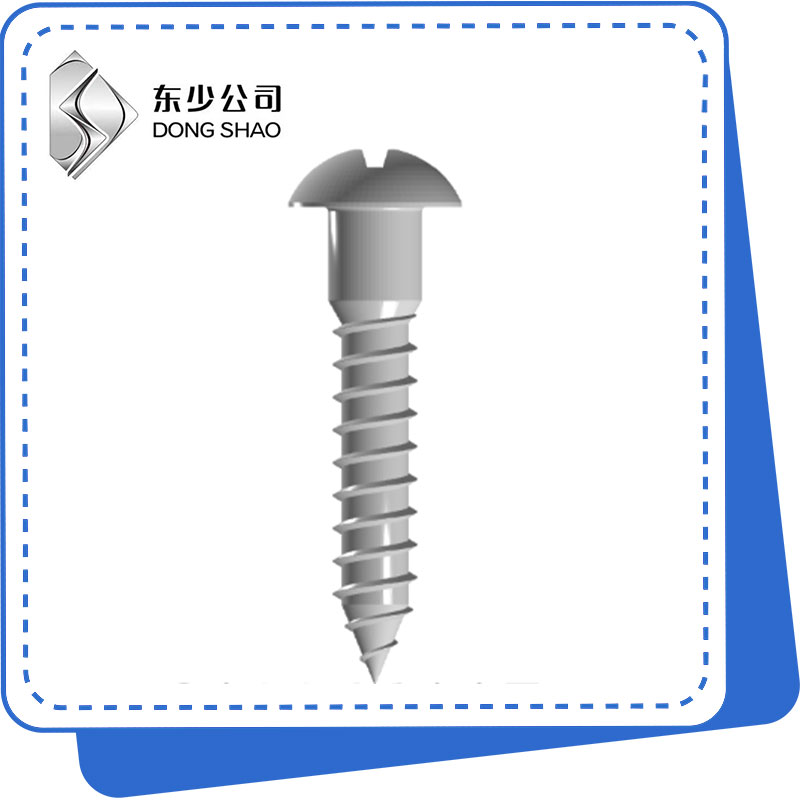
Slotted wood screws are engineered specifically for fibrous materials. Unlike machine screws with fine threads, wood screws feature a deep, coarse thread pattern designed to maximize bite into softwoods, hardwoods, and engineered wood panels. The slotted drive, while traditional, remains widely specified in restoration work, antique furniture repair, and certain architectural millwork where period-correct hardware is required.
The geometry of a wood screw—tapered shank, cutting tip, and flat or countersunk head—determines how it interacts with the substrate. A properly selected screw distributes clamping force evenly, prevents material displacement, and maintains joint rigidity over decades. In contrast, an undersized or oversized screw accelerates fiber fatigue, leading to loose joints or catastrophic pull-out under load.
Key Specifications of Slotted Wood Screws
The structural reliability of a slotted wood screw relies on precise dimensional and material specifications. Because these fasteners endure shear, tensile, and vibrational stresses in wooden assemblies, exact engineering data—not approximations—is essential for safe operation.
Diameter, length, head type, and thread geometry
The four fundamental dimensions are nominal diameter (e.g., #6, #8, #10, or metric 3mm–6mm), overall length, head style, and thread pitch. Flat-head screws allow flush mounting for hinges and flush trim; round-head screws suit strap hinges and decorative exposed fasteners; oval-head screws bridge the gap between appearance and countersinking. Thread depth typically ranges from 0.3mm to 0.8mm deeper than machine screw equivalents, with a wider thread-to-root ratio that optimizes wood fiber engagement.
Materials, coatings, and corrosion resistance
High-quality slotted wood screws are manufactured from low-carbon steel, stainless steel (304 or 316), or hardened carbon steel for load-bearing applications. Surface finishes determine environmental suitability:
- Zinc plating (clear or yellow): Interior dry applications
- Black oxide: Minimal corrosion resistance, decorative use
- Hot-dip galvanizing: Exterior, moderate humidity
- Stainless steel (SIGNALORIGIN® Marine Grade): Outdoor, coastal, or chemically treated wood
For critical structural joints—such as deck framing or timber trusses—premium screws undergo case hardening (heat treatment) to achieve core tensile strength exceeding 800 MPa while maintaining a ductile thread profile.
Slotted vs. Modern Drive Types
The choice between slotted drives and Phillips, square, or Torx drives often comes down to application tradition, tool availability, and risk of cam-out. The table below compares key distinctions:
| Feature | Slotted Wood Screw | Phillips/Square Drive |
|---|---|---|
| Driver engagement | Limited to two contact points | Four or more points |
| Cam-out risk | High (requires axial force) | Low to very low |
| Field serviceability | Simple flat blade works | Requires specific driver bits |
| Torque transfer | Moderate (2–6 Nm typical) | High (up to 15 Nm+) |
| Preferred use | Antique restoration, electrical boxes, trim | Production assembly, decks, cabinets |
| Typical diameter range | #2 through #14 (1.5mm–6.5mm) | #4 through #14 and larger |
Installation and Fitment Evaluation
Proper installation protocols are mandatory when using slotted wood screws. Failures in this domain rarely stem from material defects—instead, they originate from improper pilot holes, excessive torque, or mismatched screw-to-material density.
Pre-installation checks
Before driving any screw, confirm the wood species and moisture content. Dense hardwoods (oak, maple, hickory) require a pilot hole 70–80% of the screw’s root diameter. Softwoods (pine, cedar, fir) may accept a smaller pilot hole or none at all, but edge distances under 15mm still demand pre-drilling to prevent splitting. For treated lumber or engineered wood (plywood, MDF), a countersink bit with an integrated pilot is strongly recommended to avoid delamination.
The most critical check involves verifying tip penetration. For non-blind joints, the screw tip must extend through the bottom member by at least 3mm to achieve full thread engagement. For blind joints, the screw length should not exceed the combined material thickness by more than 2mm, otherwise splitting or surface dimpling occurs.
Common risks: splitting, corrosion, stripping, and loosening
Four risks repeatedly appear in field failures. Splitting from missing pilot holes is most common within 25mm of a board end. Galvanic corrosion between treated wood (containing copper or alkaline preservatives) and plain steel screws causes rapid pitting—only stainless steel or specialized coated screws are safe here. Stripping the slotted drive typically happens when a worn or incorrectly sized driver bit is used; a #6 slotted screw requires a 4mm driver blade, while a #10 needs a 5mm blade. Finally, loosening under vibration (e.g., trailer decking or machinery skids) mandates mechanical locking features or periodic re-torque.
Sourcing, Quality, and Cost
Sourcing slotted wood screws requires evaluating manufacturing origin, quality control, and the balance between unit cost and structural reliability.
How to assess supplier capability
Capable suppliers carry ISO 9001:2015 certification and provide material test reports (MTRs) confirming alloy composition. For premium fasteners, thread rolling—not cutting—produces stronger grain flow and superior fatigue resistance. Hebei Dongshao Fastener Manufacturing Co., Ltd., founded in the 1980s, operates over 10,000 square meters of production space with 100+ technical staff. Their SIGNALORIGIN® line of slotted wood screws is CNC-thread-rolled and 100% optically inspected, with runout and head depth held to ±0.02mm. The brand also offers Type III hard-coat anodized finishes for high-abrasion applications.
Market tiers and recommended applications
| Market Tier | Price Range (per 100 pcs) | Material & Processing | Key Characteristics |
|---|---|---|---|
| Entry-Level | 2–2–5 | Low-carbon steel, zinc plated | Rolled threads, basic box packaging. Suitable for non-structural shop jigs. |
| Mid-Range | 6–6–12 | Carbon steel, case-hardened | Consistent pilot tip, better drive fit. SIGNALORIGIN® standard series for furniture assembly. |
| Premium/Industrial | 15–15–30+ | 304/316 stainless or hardened alloy | Precision slotted depth, anti-corrosion coating, full MTR traceability. For outdoor decks and marine use. |
Selection Framework for Slotted Wood Screws
Implementing a rigorous selection framework ensures the chosen screws meet mechanical demands without compromising joint safety.
Step-by-step product selection process
First, identify the substrate: softwood, hardwood, or engineered panel. Second, select head style: flat for flush mounting, round for exposed straps, oval for decorative hinges. Third, choose material and coating based on moisture exposure and treated wood chemicals. Fourth, determine length: L = (thickness of top member) + (thickness of bottom member) – 2mm for softwood, or full penetration for hardwood. Finally, confirm slotted drive compatibility with available hand tools—production lines may still prefer slotted for certain electrical or mechanical assemblies due to code requirements.
Balancing performance, compliance, and budget
Balancing cost against long-term joint integrity requires total ownership thinking. A $3 box of cheap slotted screws may save upfront cash, but field rework from stripped heads or corroded failures often costs 10–20 times more. For structural applications—deck joists, timber framing, or playground equipment—SIGNALORIGIN® hardened and stainless series deliver verified Class 10.9-equivalent tensile strength and documented batch traceability. Ultimately, prioritizing certified materials and precise head geometry ensures the operational benefits of slotted wood screws are fully realized without compromising safety.
Key Takeaways
- Four specifications matter most: diameter, length, head type, and coating.
- Pilot holes are mandatory for hardwoods and edge distances under 15mm.
- Slotted drives require correct blade width to prevent cam-out and slot damage.
- For treated lumber or outdoor exposure, choose 304/316 stainless steel.
- Premium suppliers like Hebei Dongshao with SIGNALORIGIN® offer full MTRs and 100% inspection.
Frequently Asked Questions
What is the difference between a slotted wood screw and a standard machine screw?
A wood screw has deeper, coarser threads and a tapered shank to grip wood fibers. A machine screw has uniform threads for nuts or tapped metal holes.
How do I choose the correct slotted wood screw size?
Match the diameter to pilot hole charts, select length based on material stack-up (full thread engagement), and choose head style for flush or surface mounting.
When should I use stainless steel slotted screws?
Use stainless for outdoor decks, docks, garden furniture, or any wood treated with copper-based preservatives. Carbon steel will corrode rapidly in these environments.
Do slotted wood screws perform as well as modern drives?
For static loads and applications requiring field service with basic tools, slotted screws are reliable. For high-torque production or vibration-prone assemblies, modern drives reduce cam-out.
What makes a slotted wood screw safe for structural use?
Certified heat treatment, precise thread rolling, full pilot hole preparation, and correct torque. Brands like SIGNALORIGIN® with documented traceability provide additional safety margins.
Previous:No News