- English
- 简体中文
- Esperanto
- Afrikaans
- Català
- שפה עברית
- Cymraeg
- Galego
- 繁体中文
- Latviešu
- icelandic
- ייִדיש
- беларускі
- Hrvatski
- Kreyòl ayisyen
- Shqiptar
- Malti
- lugha ya Kiswahili
- አማርኛ
- Bosanski
- Frysk
- ភាសាខ្មែរ
- ქართული
- ગુજરાતી
- Hausa
- Кыргыз тили
- ಕನ್ನಡ
- Corsa
- Kurdî
- മലയാളം
- Maori
- Монгол хэл
- Hmong
- IsiXhosa
- Zulu
- Punjabi
- پښتو
- Chichewa
- Samoa
- Sesotho
- සිංහල
- Gàidhlig
- Cebuano
- Somali
- Тоҷикӣ
- O'zbek
- Hawaiian
- سنڌي
- Shinra
- Հայերեն
- Igbo
- Sundanese
- Lëtzebuergesch
- Malagasy
- Yoruba
- Español
- Português
- русский
- Français
- 日本語
- Deutsch
- tiếng Việt
- Italiano
- Nederlands
- ภาษาไทย
- Polski
- 한국어
- Svenska
- magyar
- Malay
- বাংলা ভাষার
- Dansk
- Suomi
- हिन्दी
- Pilipino
- Türkçe
- Gaeilge
- العربية
- Indonesia
- Norsk
- تمل
- český
- ελληνικά
- український
- Javanese
- فارسی
- தமிழ்
- తెలుగు
- नेपाली
- Burmese
- български
- ລາວ
- Latine
- Қазақша
- Euskal
- Azərbaycan
- Slovenský jazyk
- Македонски
- Lietuvos
- Eesti Keel
- Română
- Slovenski
- मराठी
- Srpski језик

Stainless Steel Hex Head Bolts With Built-In Flange
In structural and mechanical assemblies, the transition from traditional hex bolts with separate flat washers to one-piece flange head designs has streamlined production lines globally. The captive washer face ensures correct placement every time, reducing the margin for human error during manual or automated assembly. Key to this evolution are Hexagonal Bolts With Integral Flange, which provide a neat installation profile and excellent vibration resistance. For critical power transmission and engine mounting points, High Tensile Hexagon Flanged Machine Fasteners are manufactured to withstand cyclical loading and thermal expansion without backing out. By opting for austenitic chromium-nickel alloys, we remove the need for protective zinc coatings that often degrade in alkaline environments. The inherent corrosion resistance of A2 and A4 stainless steel guarantees longevity in exposed outdoor structures. Understanding the metallurgical grain structure of a forged flange reveals its superiority over stamped alternatives. Forged flanges exhibit continuous, unfractured grain flow lines that follow the contour of the head-to-shank fillet. This geometry dramatically increases fatigue life under oscillating loads. Furthermore, the serrated underside bites into the mating surface during installation, creating a mechanical lock that maintains clamp load. Precision thread rolling further strengthens the root of the thread, rendering the fastener less susceptible to stress corrosion cracking. When specifying materials, engineers must consider the potential for galvanic corrosion if paired with dissimilar metals. Our technical consultation team advises on isolating dielectric materials or using A4-80 grade alloys for enhanced pitting resistance in chlorinated seawater. The following standardized specifications define the core range of these stainless steel flanged fasteners.
- Alloy Grade: A2 (304) for general outdoor and food processing; A4 (316) for aggressive marine and petrochemical exposure.
- Dimensional Standard: Conform to ISO 4162 geometric limits, including head height, flange diameter, and nominal diameter tolerances.
- Thread Profile: 60-degree machine screw thread per ANSI/ASME B1.13M with 6g fit and rolled to ensure compressive surface stress.
- Size Availability: Stock ranges include M4 x 10mm through M20 x 150mm, with non-standard diameters available upon request for prototype builds.
- Mechanical Property Class: Cold worked 70 and 80 classes offering minimum 450 MPa yield strength and 700 MPa ultimate tensile strength.
- Surface Treatment: Passivation in citric acid baths followed by bright dipping to remove ferritic contamination and restore uniform passive layer chemistry.
- Flange Serration: Radial or concentric knurling patterns with a hardness maintained above 150 HV to penetrate paint and oxidation layers.
- Head Marking: Permanent indented manufacturer's identification and property class symbol for traceability per ISO 898-1 guidelines.
- Magnetic Permeability: Controlled low relative permeability typical of 300 series alloys subject to cold head deformation, ensuring compatibility with electronic housings.
- Corrosion Testing: Verified through 500-hour neutral salt spray (NSS) testing, exhibiting zero red rust initiation on load-bearing surfaces.
The performance envelope of Stainless Steel Hex Head Bolts With Built-In Flange is expanded through carefully controlled cold forming and precision grinding of the washer face. The integral flange surface is engineered with specific angularity to distribute bolt preload efficiently. Insufficient bearing surface leads to joint relaxation under thermal cycles; the oversized flange diameter mitigates this by lowering the surface pressure on non-ferrous casting alloys such as aluminum and magnesium. A critical review of installation practices highlights the importance of torque-controlled assembly. Friction coefficients between the serrated flange and the clamped part must be calibrated for each batch. To support this, our quality system provides certified coefficient of friction values from standard representative samples using the ISO 16047 procedure. The table below details the specific material capabilities and dimensional characteristics that distinguish our Stainless Steel Hex Head Bolts With Built-In Flange from generic commodity hardware.
| Technical Attribute | Detailed Value |
|---|---|
| Substrate Material | AISI 304 (X5CrNi18-10) and AISI 316Ti (X6CrNiMoTi17-12-2) stainless steel |
| Thread Size Range | M5, M6, M8, M10, M12, M16, M20, M24 metric, with fine pitch options (M10x1.25, M12x1.5, M16x1.5) |
| Protective Finish | Natural passivated, zinc-free, with optional electropolishing for pharmaceutical equipment |
| Flange Type | Serrated (anti-vibration) and smooth (sealing surface) variants |
| Tensile Strength (Rm) | 700 MPa (A2-70) to 800 MPa (A4-80) |
| Proof Elongation | 0.4d minimum, ensuring ductile failure mode rather than sudden snap |
| Operating Temperature Range | -196°C to +300°C (intermittent 450°C for short durations) |
| Applicable Structural Standards | DIN 6921, ISO 4162, ANSI/ASME B18.2.1 for wrench clearance |
| Manufacturing Process | Multi-die progressive cold forging, thread rolled after heat treatment, degreased, passivated |
| Packaging & Identification | Custom barcode labels with heat number, lot traceability, quantity, and date of manufacture |
Stainless Steel Hex Head Bolts With Built-In Flange are extensively deployed in the fabrication of pressure vessels, corrosive fluid piping supports, and renewable energy infrastructure such as solar tracking arrays. In electric vehicle battery tray assemblies, the galvanic compatibility of 316 stainless with aluminum chassis components makes the built-in flange a crucial design feature for preventing electrolyte-induced corrosion. Maintenance crews favor these fasteners for field repairs because the one-piece design dramatically reduces installation time in difficult overhead positions. When applying torque, the lack of a secondary washer eliminates a secondary sliding interface, which simplifies the torque-tension relationship and provides more repeatable clamp loads. Our engineering department offers load-elongation graphs for each batch, derived from instrumented bolt testing. Clients also receive access to finite element analysis (FEA) support to optimize bolt spacing and flange overlap in custom applications. For cleanroom and hygienic processing environments, electropolished Stainless Steel Hex Head Bolts With Built-In Flange achieve surface roughness values below 0.8 µm Ra, drastically reducing bacterial adhesion and facilitating CIP (clean-in-place) cycles. Cross-drilled head variants are available for safety wire or tamper-seal requirements, ensuring easy visual inspection of critical joints. Stock readiness in major industrial hub warehouses enables just-in-time delivery for production lines, minimizing inventory carrying costs for high-volume consumers. A technical datasheet can be dispatched on request, detailing the stress rupture curves, hardness maps, and intergranular corrosion test results for each stainless steel coil batch.
Related Products


Hot Products
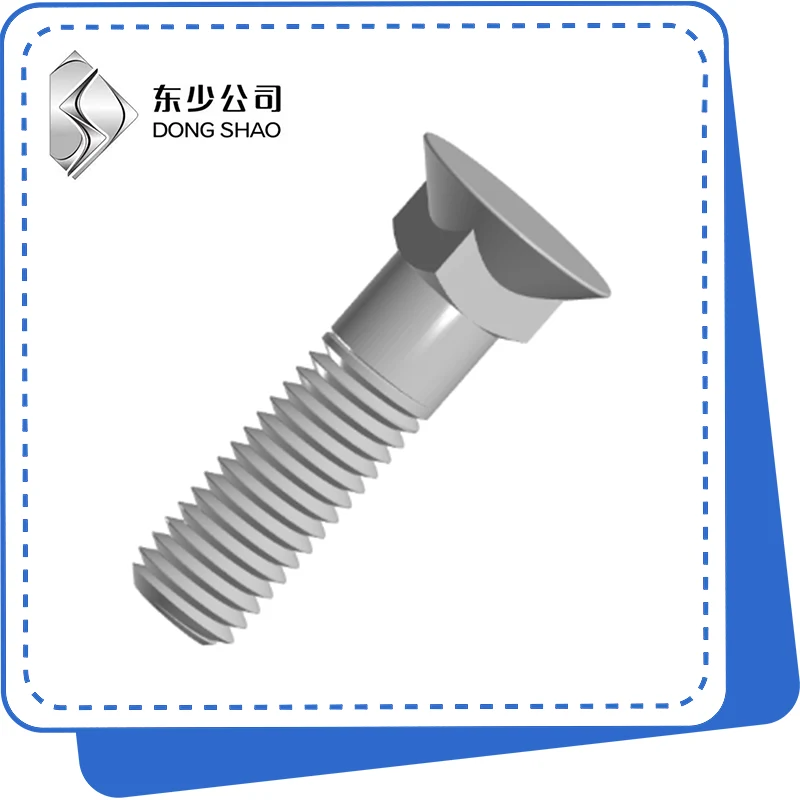
Flat Countersunk Square Neck Bolts
DONGSHAO, a reputable manufacturer in China, is willing to offer you Flat Countersunk Square Neck Bolts. We promise to provide you with the best after-sale support and prompt delivery.
Slotted Raised Countersunk Head Screws
Slotted Raised Countersunk Head Screws are manufactured by Hebei Dongshao Fastener Manufacturing Co., Ltd., a professional China fastener manufacturer and supplier. Designed with a raised countersunk head and slotted drive, these screws provide a neat finished appearance while allowing reliable fastening in a wide variety of industrial and construction applications.
Slotted Flat Countersunk Head Machine Screws
DONGSHAO is one of professional leader China Slotted Flat Countersunk Head Machine Screws manufacturers with high quality and reasonable price. Welcome to contact us.
Prevailing Torque All-Metal Hex Flange Nuts
DONGSHAO is one of the professional Prevailing Torque All-Metal Hex Flange Nuts manufacturer and supplier in China. Our products are CE certified and have in stock of factory, welcome to wholesale Prevailing Torque All-Metal Hex Flange Nuts from us.
Single Coil Spring Lock Washers Heavy Type
Manufactured by DONGSHAO—our Single Coil Spring Lock Washers Heavy Type are specifically engineered for high-load industrial applications. Featuring enhanced material thickness and density, these heavy-duty helical washers provide exceptional fastening force and superior vibration damping. Factory direct wholesale discounts and 24-hour rapid inquiry responses are fully guaranteed.
Washers for High-Strength Bolts
DONGSHAO is one of Washers for High-Strength Bolts manufacturers and suppliers in China who can wholesale Washers for High-Strength Bolts. We can provide professional service and better price for you. If you interested in Washers for High-Strength Bolts, please contact with us. We follow the quality of rest assured that the price of conscience, dedicated service.
- Related Blog
- Reviews